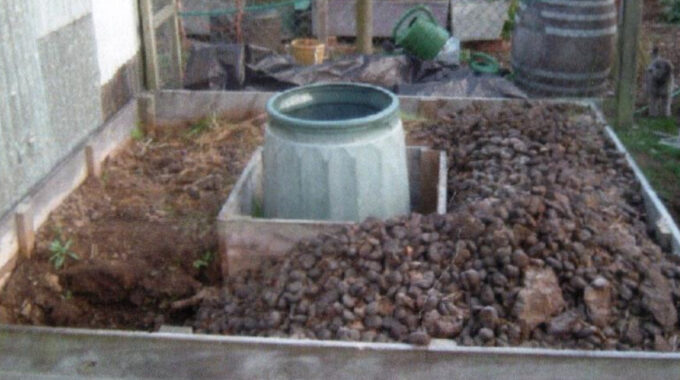
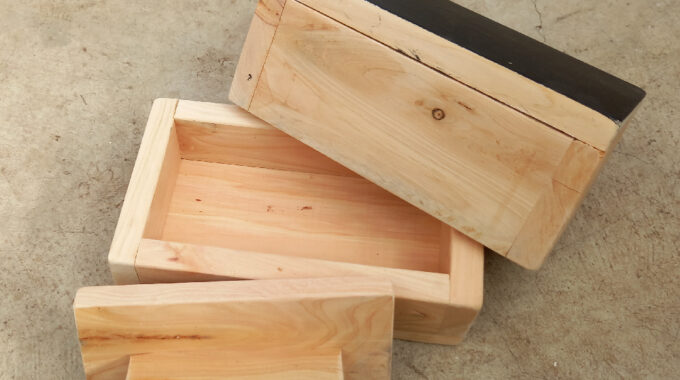
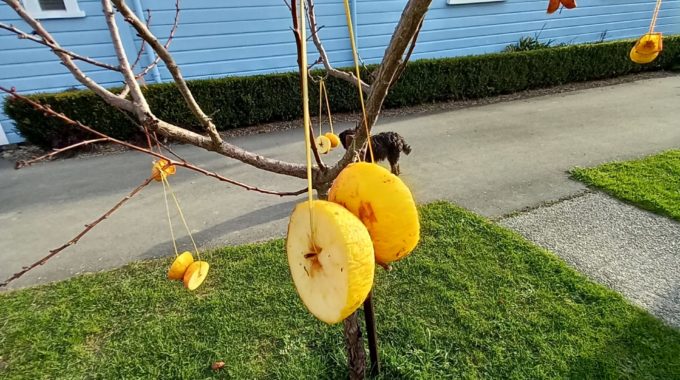
Our Equestrian Manure Worm Farm When we had donkeys, we built a large worm farm…
Large Scale Bokashi-Style Composting
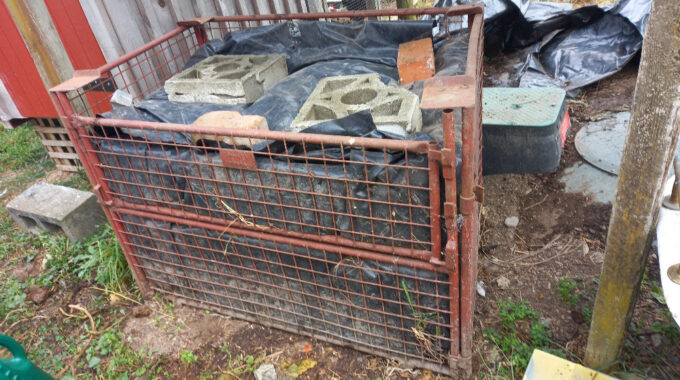
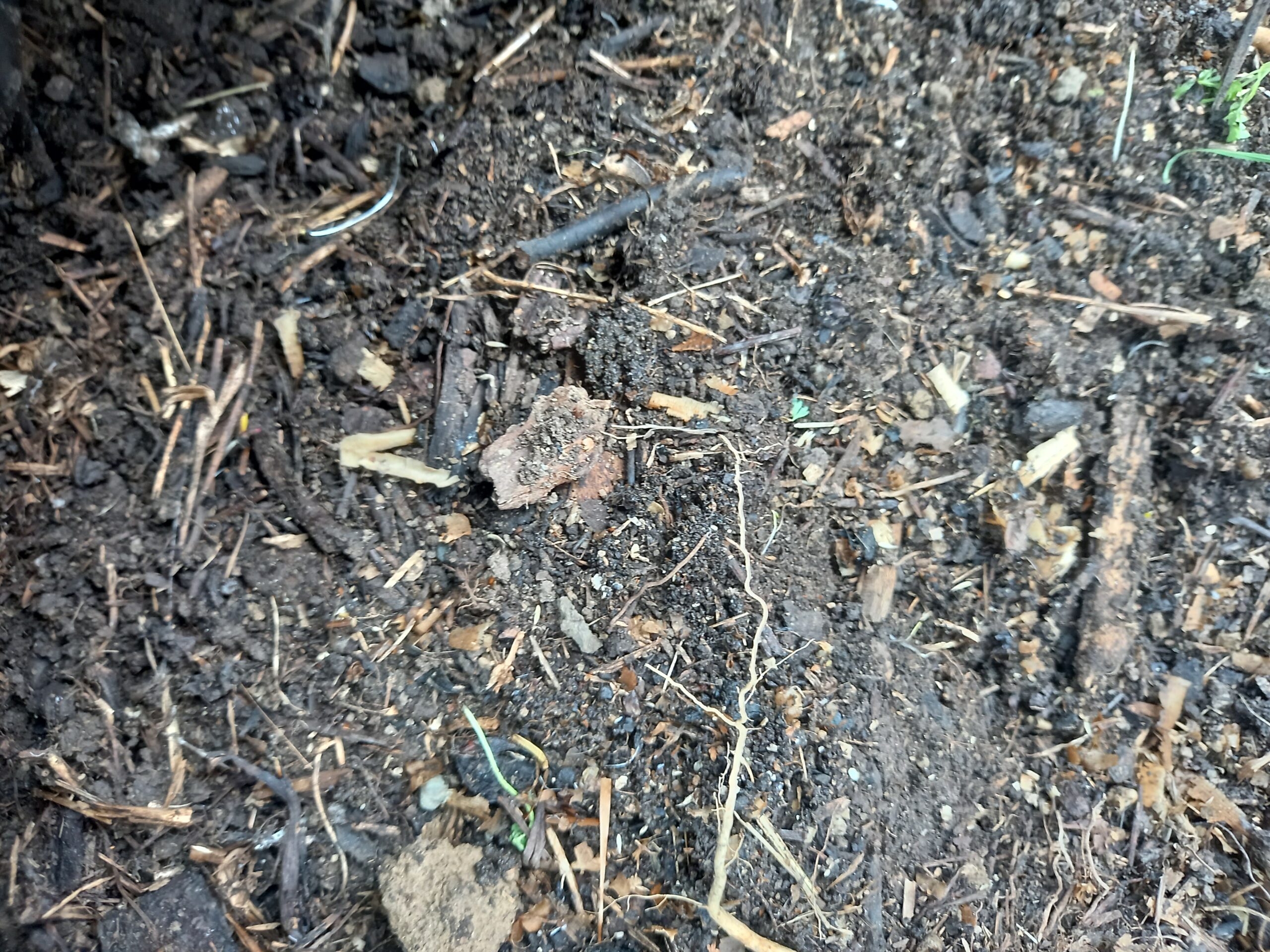
This system works on a similar principle to Bokashi, but on a much larger scale. Instead of using small airtight buckets, we use large, removable metal frames lined with plastic to create sealed fermentation bins.
We use a dismantlable metal frame in the shape of a box, made from four hinged wire-mesh sides.
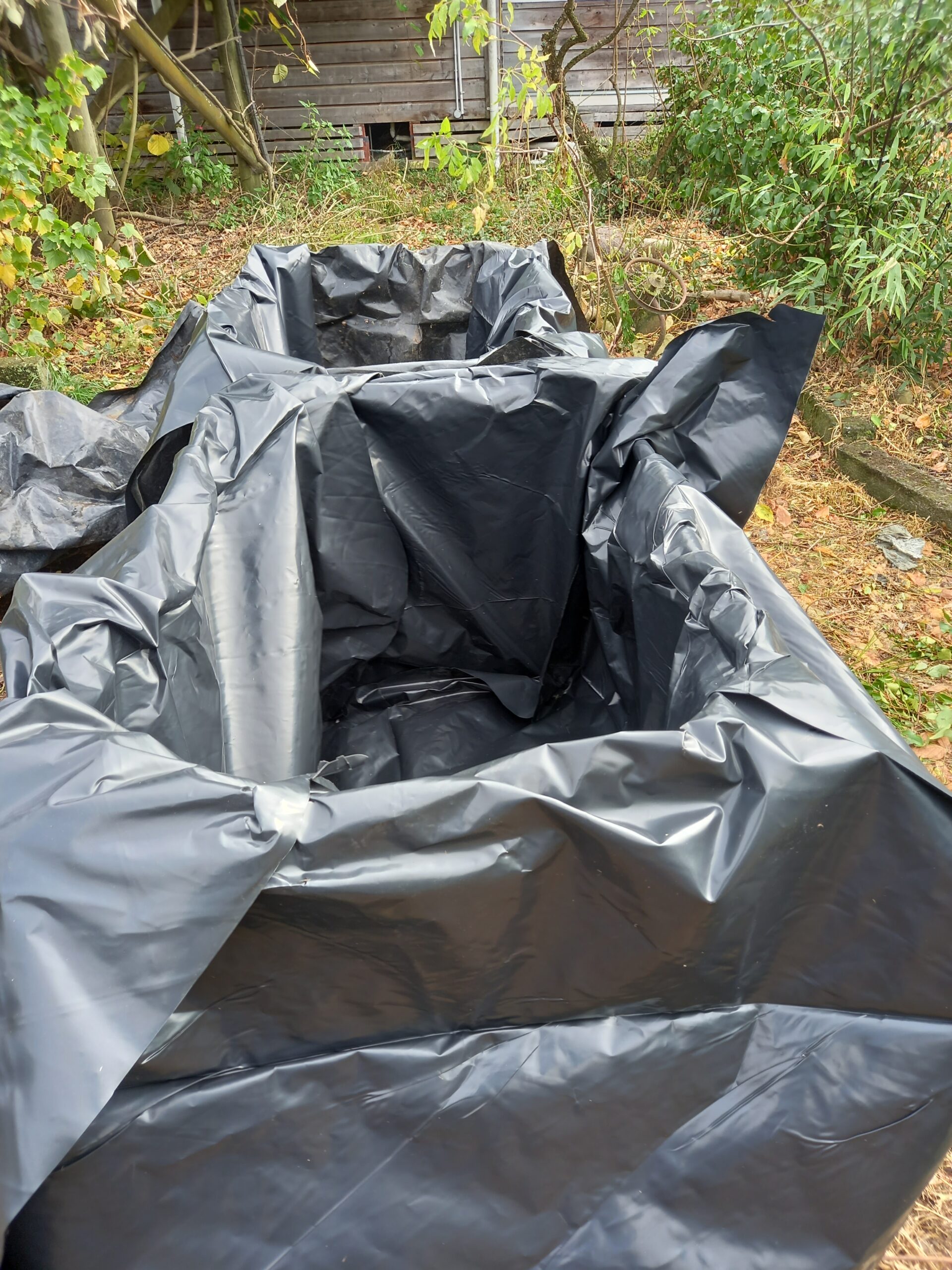
We use a dismantlable metal frame in the shape of a box, made from four hinged wire-mesh sides. The box is lined with two sheets of plastic.
The first sheet runs from left to right across the box and is at least 150 mm wider than the box on each side. The second sheet runs from front to back and is also at least 150 mm wider than the box on each side. Both sheets are large enough to extend well over the top of the bin when it is full. This creates a complete plastic lining and allows the contents to be sealed from the air and light.
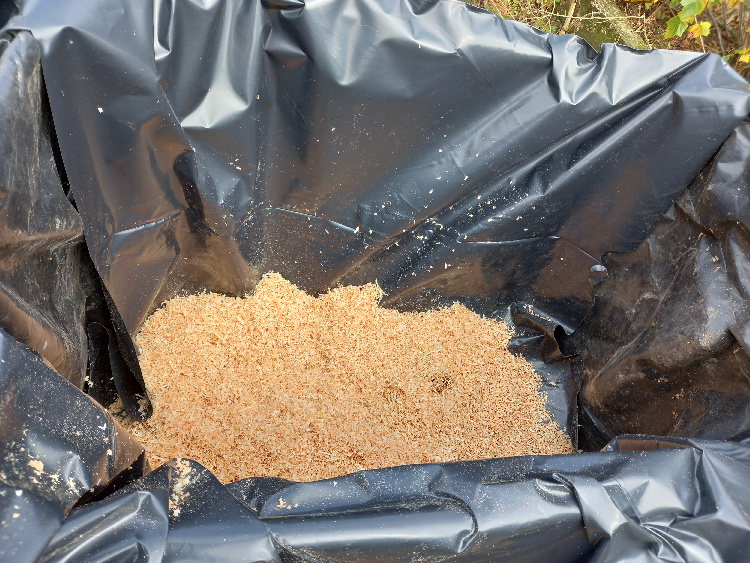
The box is filled with organic material in layers. When adding fresh green material, particularly grass clippings or fresh weeds, we add sawdust between the layers. The sawdust helps absorb excess moisture and keeps the material from becoming too wet and compacted. It is not necessary when the material being added is already suitably balanced.
This method is particularly useful for dealing with vigorous weeds such as couch grass and ivy. These can be added together with other weeds and garden waste. It is important not to add weeds containing mature seeds or woody sticks and branches.
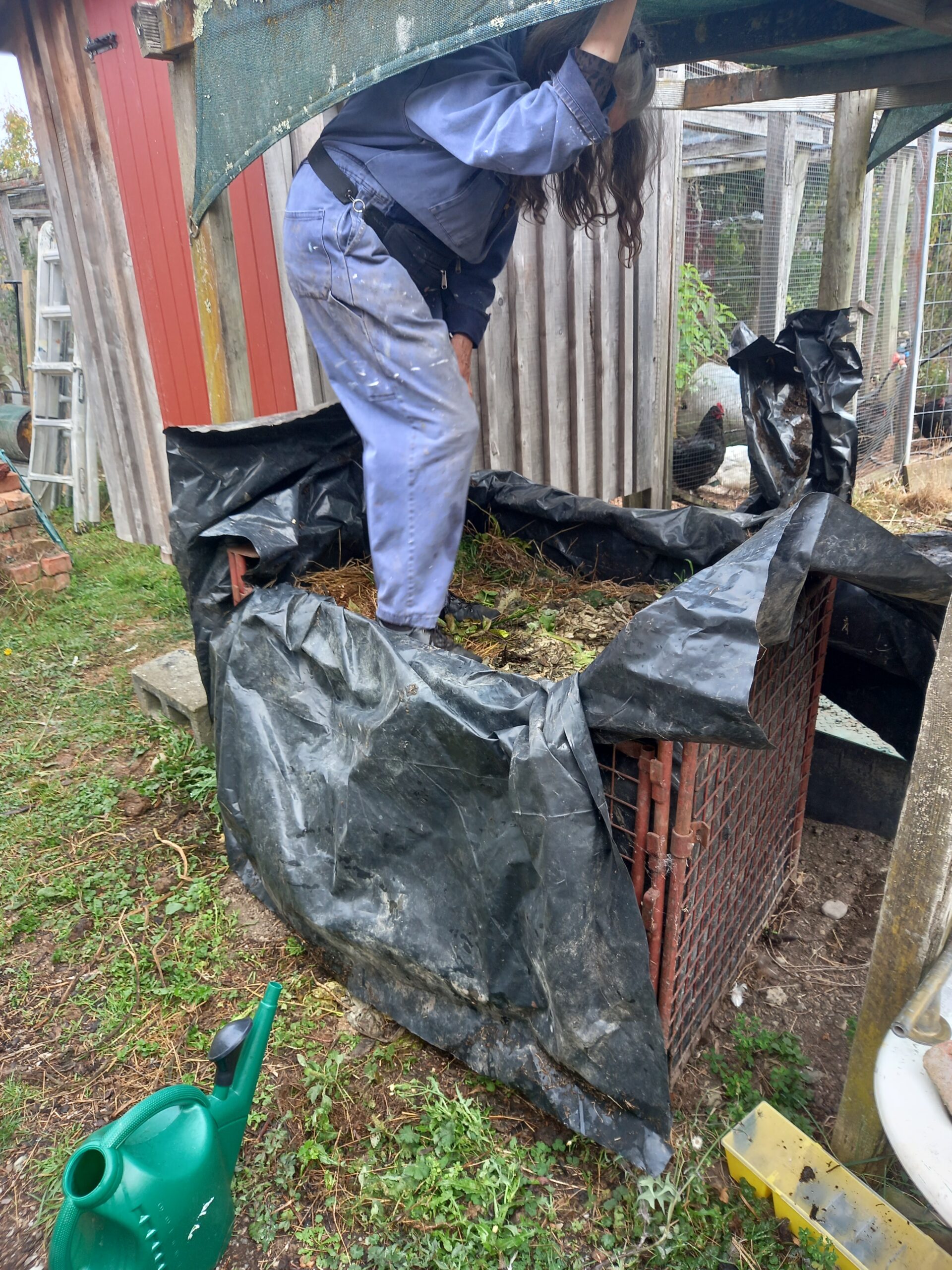
As we fill the box, we regularly stand on the material to compress it.
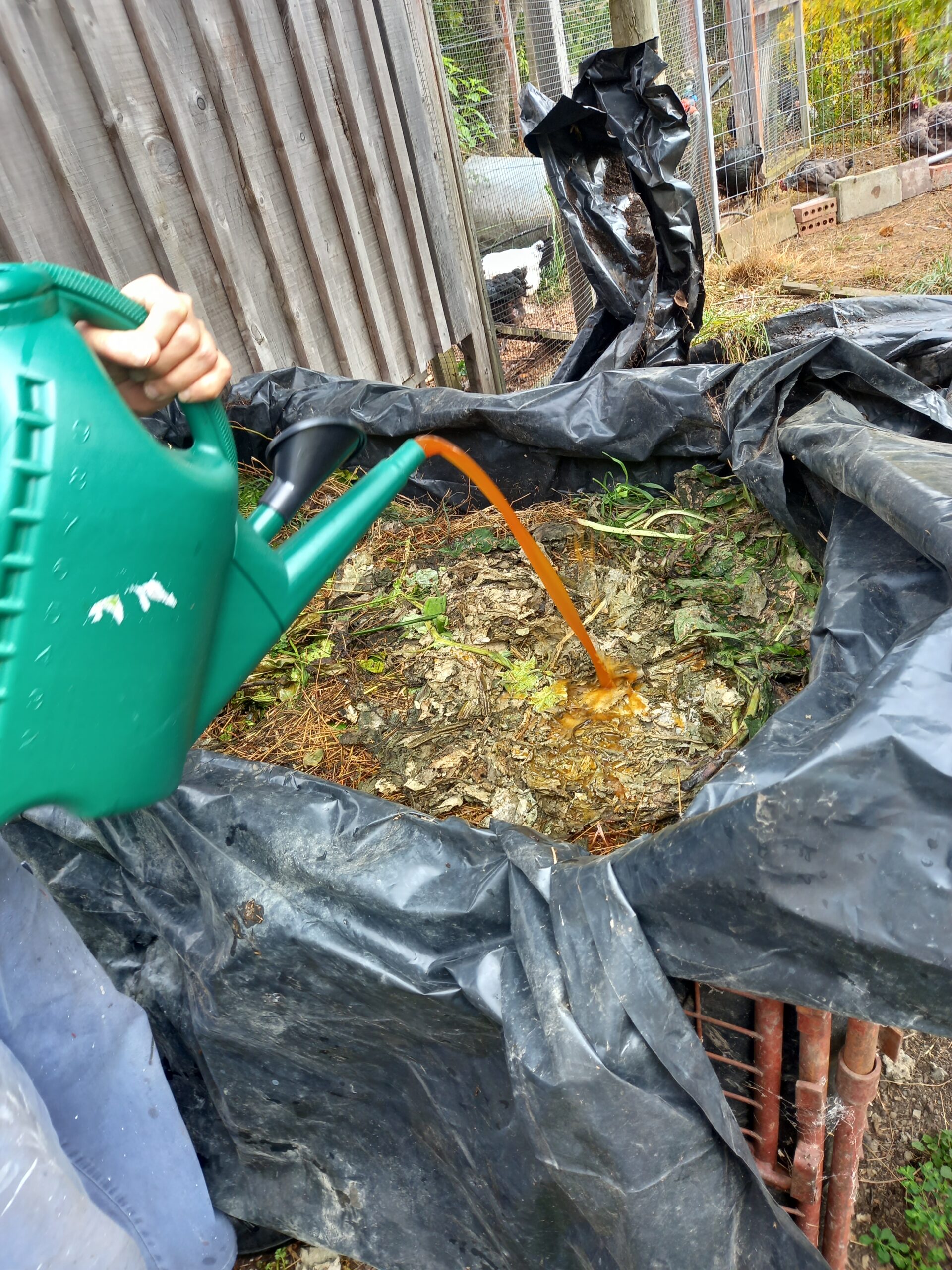
We make sure the contents are moist before sealing the bin.
We add EM (Effective Microorganisms) to help speed up the process. We usually add approximately 1 litre of EM to a 10-litre watering can and apply it over the material. However, EM is not essential. The system also works without EM, although the breakdown process is slower. We sometimes also add a small amount of fishmeal.
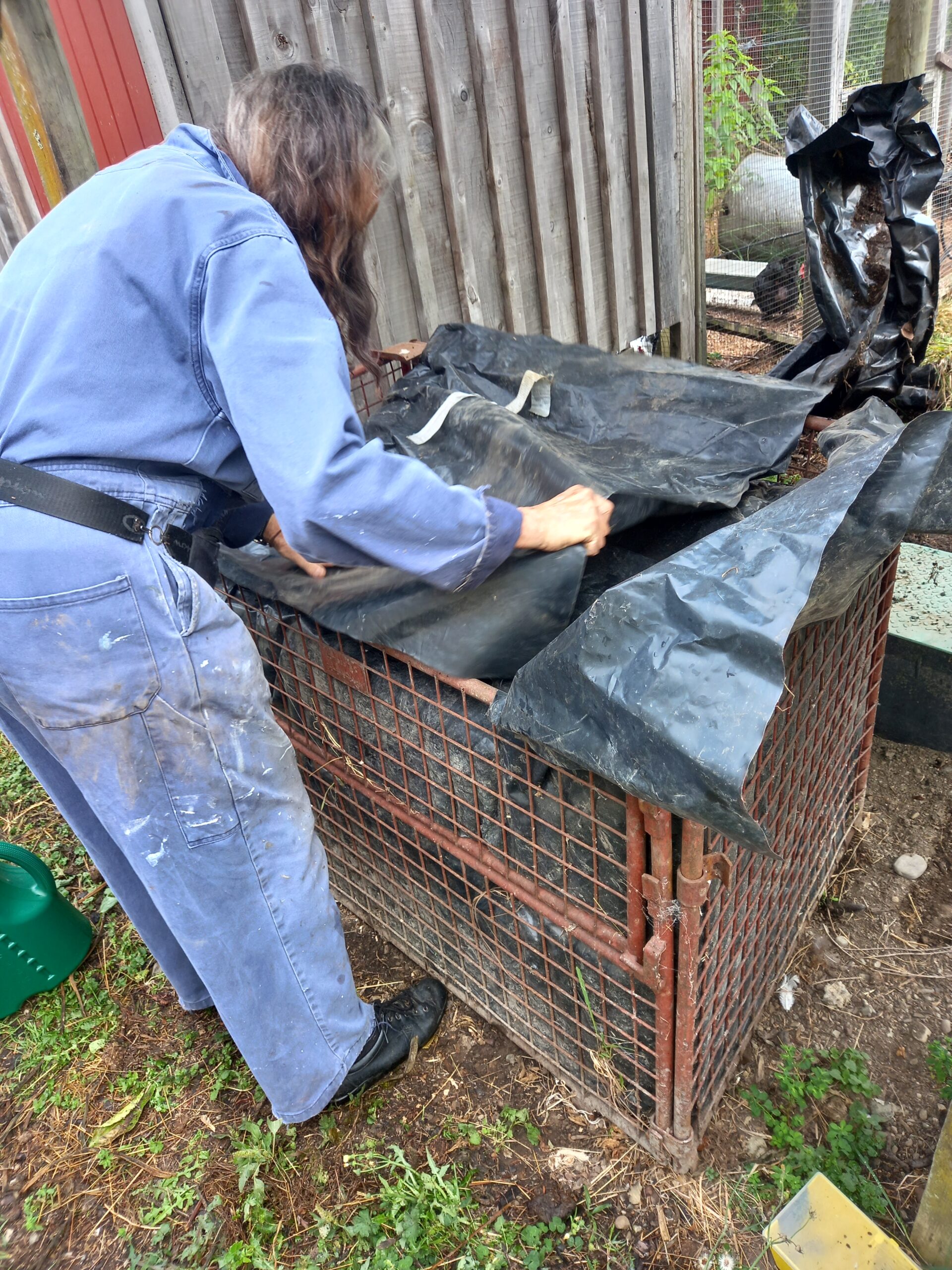
Once the box is full, both sheets of plastic are folded over the top of the material. Because both sheets extend well beyond the sides of the box, they can completely cover the top and overlap each other. We seal the plastic as tightly as possible, making sure that no light gets in and minimising the amount of air entering the bin. Heavy stones or slabs are then placed on top of the plastic to hold it firmly in place.
The metal frame can then be removed and used to set up another bin. We leave the filled bins for approximately six months.
The material reduces to around half its original volume as it breaks down. The resulting material can be used in the garden or added to worm farms as food and bedding.
Every year, we also organise an apple festival where we juice apples. The leftover apple pulp is added to the plastic-lined bins in layers. We add sawdust between the layers to absorb excess moisture.
I used some of last year’s fully broken-down material in the garden, and the plants absolutely loved it.
Happy composting!
Related Posts